The Neuro-Symbolic Technology

3 Exclusive Patents 10 Years Inria R&D

The Yona Robotics software platform relies on patented proprietary symbolic AI technology — explainable mathematical models and rules — allowing the robot's physical environment to be modeled with a purely geometric approach, guaranteeing functional safety.

Deep learning allows enriching this environment representation with semantic recognition modules, identification of humans or objects of interest related to the application, allowing the robot to interpret more precisely the scene in which it evolves and take relevant decisions, improving its navigation intelligence.

Inria : National Institute for Research in Digital Science and Technology
Occupancy Grids

Occupancy grid principle

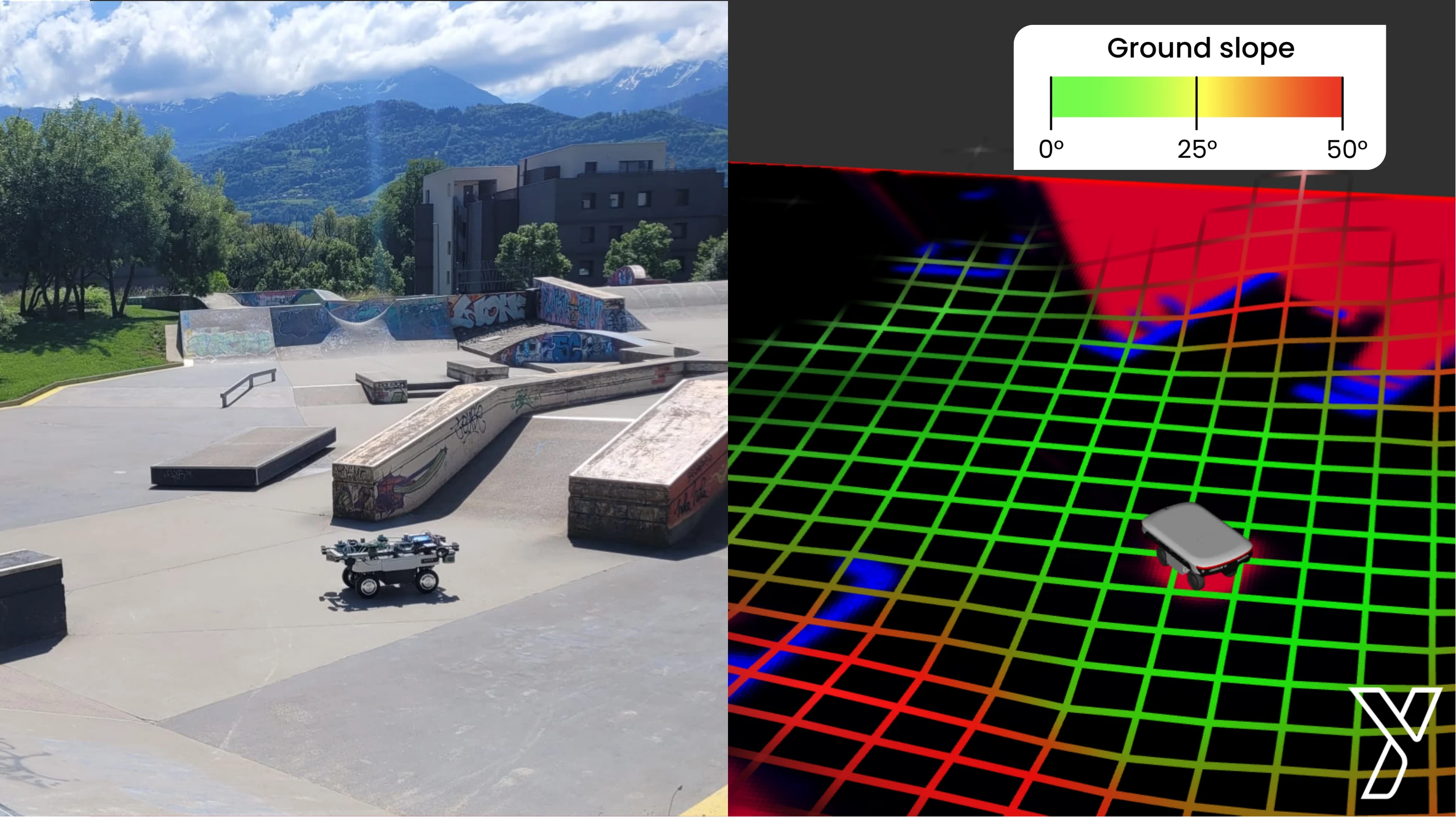
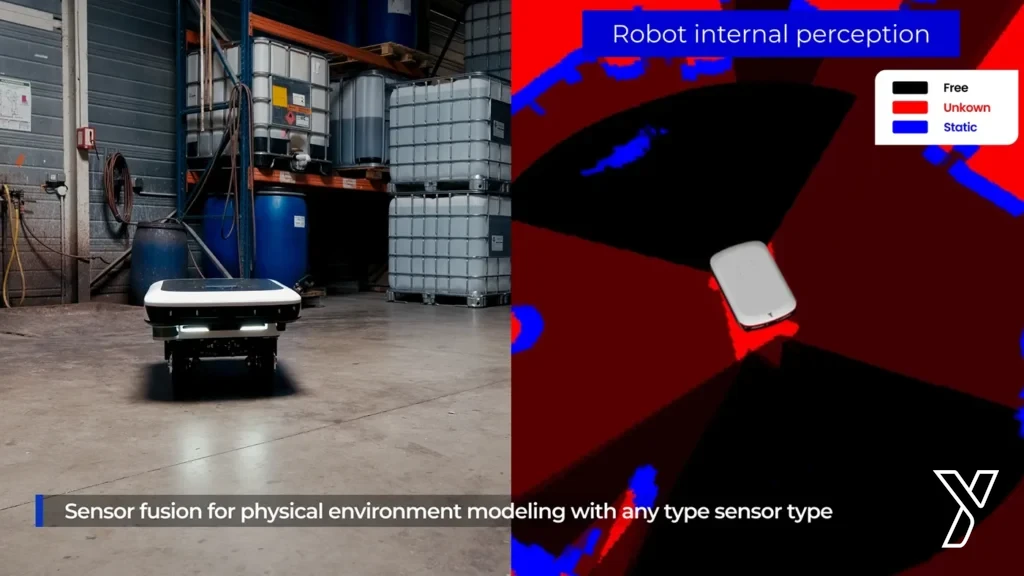
Yona Robotics technology builds probabilistic occupancy grids to represent the robot's environment, using data from various sensors (lidar, radar, RGBD camera, Ultrassons, ToF ...).

Thanks to probabilistic models and a Bayesian approach, data from each sensor is interpreted, different uncertainties quantified and integrated, then fused with other sensors.

From data fusion and filtering, the robot builds a detailed, unified and dense representation of its close environment in elementary volumes.

Detection and tracking of dynamic objects

Detection and tracking of dynamic objects

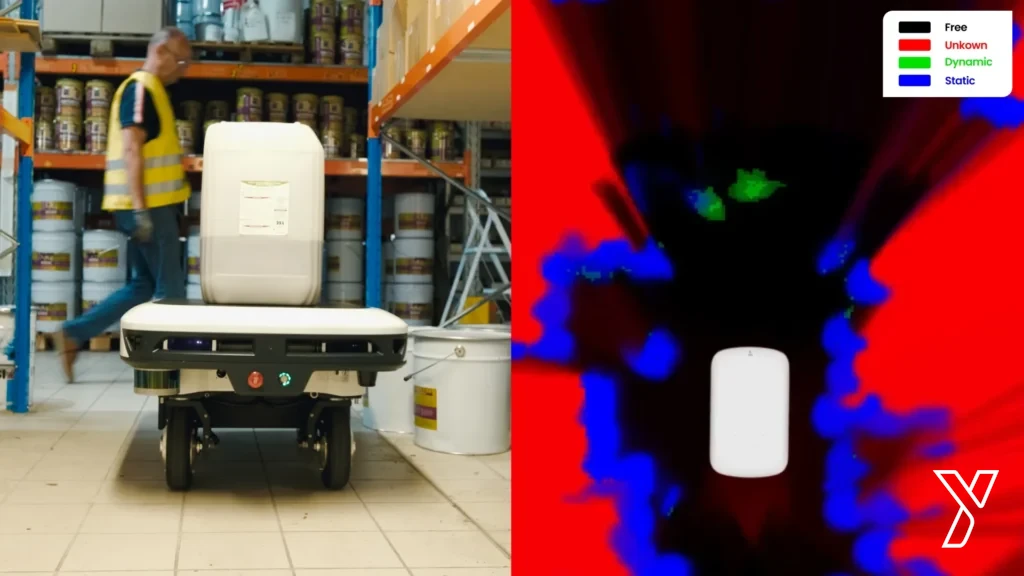
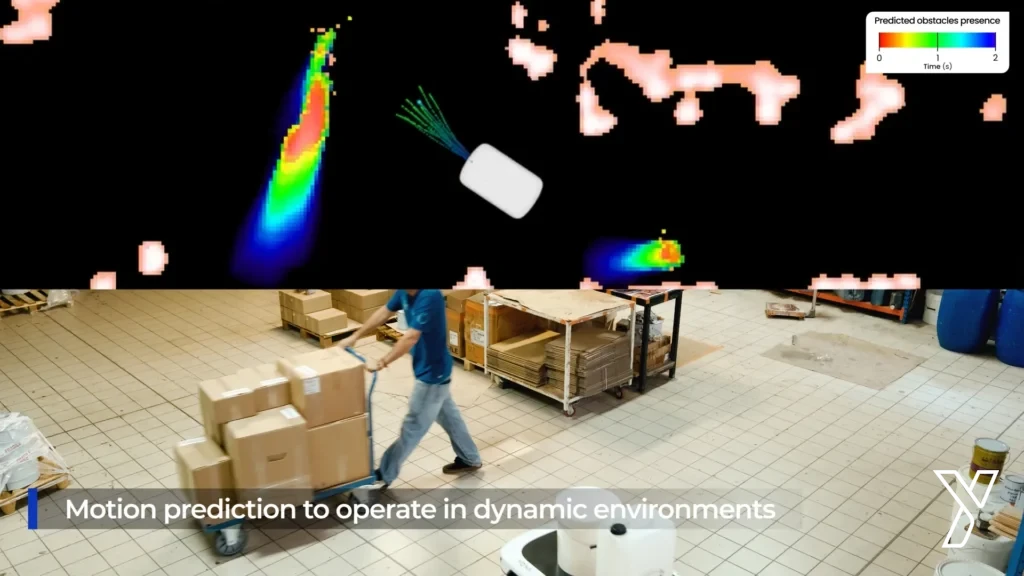
Mobile elements in occupancy grids are automatically detected and tracked, at the level of each cell.

This allows tracking of any object, of any shape, without need for prior identification.

This tracking, highly reactive and generic, is particularly important to adapt the robot's behavior to its dynamic environment, and avoid collision risks.

Semantic Recognition

Semantic recognition and humans

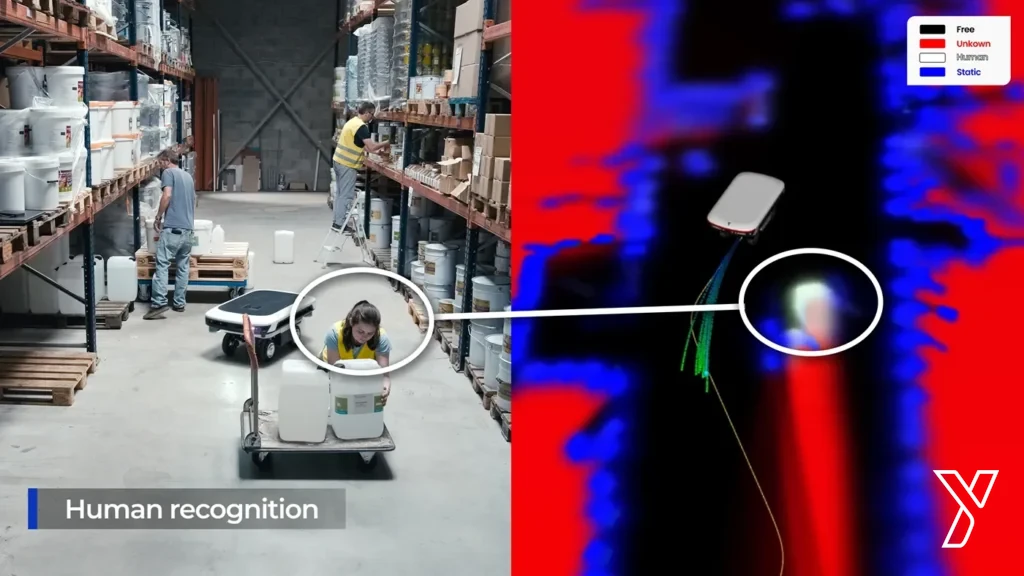
States contained in grids can be enriched by semantic information. For example, if people are present near the robot, human recognition modules, based on deep neural networks, can be added.

Human recognition allows the robot to adapt its behavior, guaranteeing better social acceptance. This is called contextual navigation.

Semantic information is not limited to humans but can concern any type of object of interest.

Navigation in evolving environments

Navigation in evolving environments

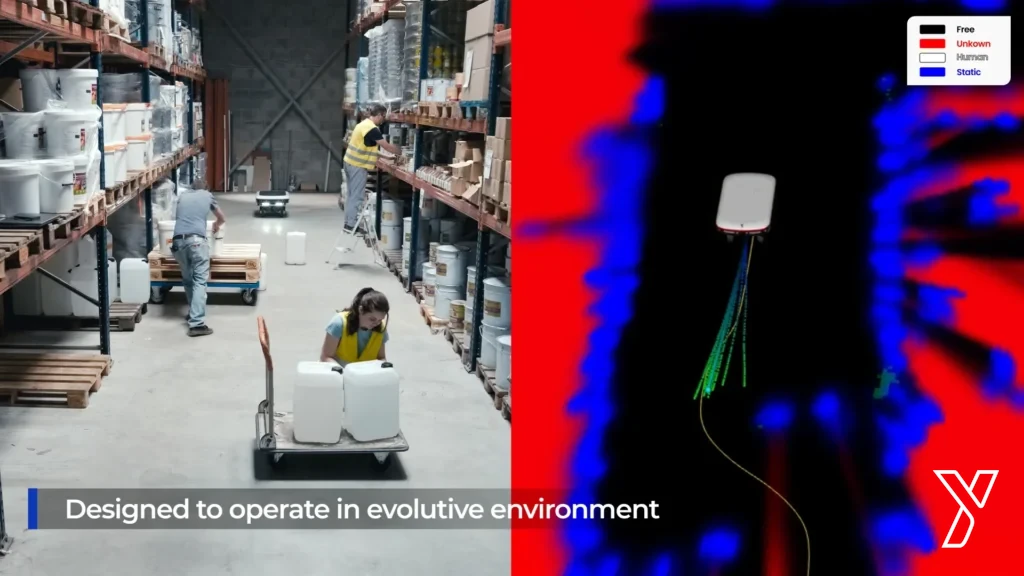
Thanks to Yona Robotics technology, robots can adapt to evolving environments, by going outside predefined trajectories.

The robot respects the final destination or imposed waypoints. Between these points, it generates its own trajectories according to the encountered environment, optimizing its time while avoiding obstacles. No prior knowledge is necessary.

Predictive Navigation

Predictive navigation

Thanks to detection and modeling of dynamic objects, Yona Robotics technology is capable of predicting their position and movement in the future.

The robot can then generate for itself trajectories adapted to this dynamic environment. This is called predictive navigation.

Technology in action